Some places are remembered for their beauty. Others, for their history. And then there are places like Niš — where history feels raw, powerful, and impossible to forget.
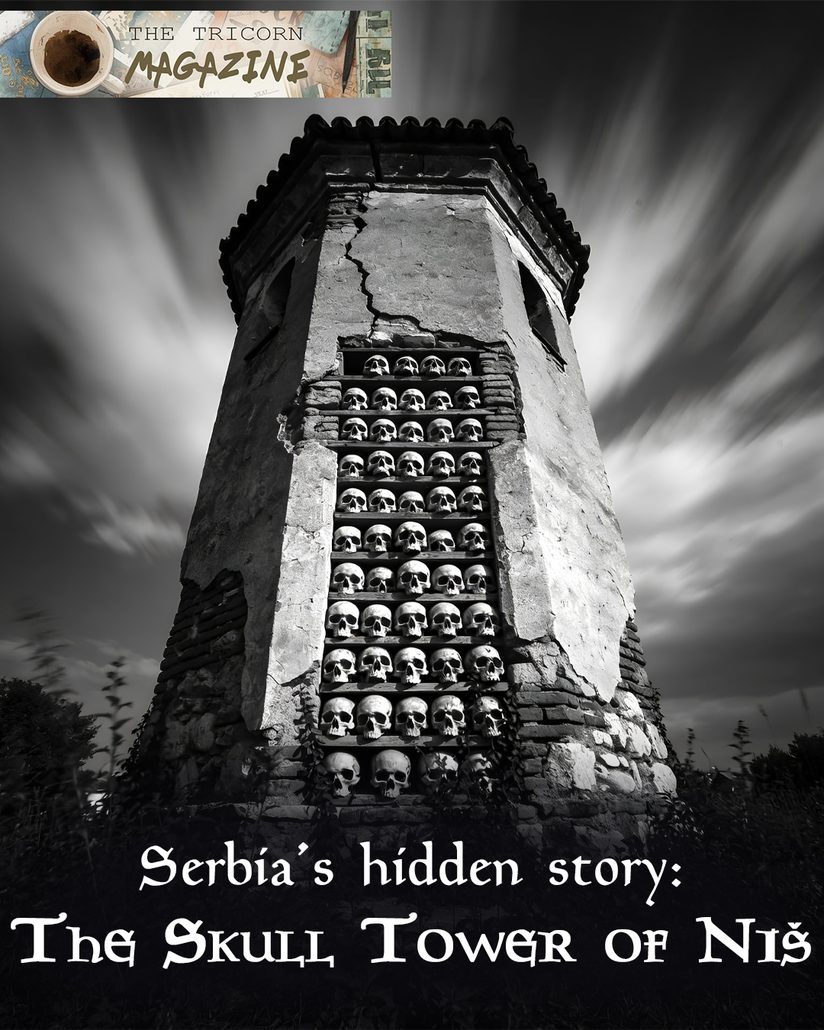
Tucked away in southern Serbia, the city of Niš is one of the oldest urban settlements in the Balkans. At first glance, it may seem quiet, almost understated. But beneath its streets lies a story that is as intense as it is moving — a story that comes to life at one of its most haunting landmarks: Ćele Kula, also known as the Skull Tower.
This is not your typical monument.
THE BATTLE THAT CHANGED EVERYTHING
The Skull Tower dates back to 1809, during the First Serbian Uprising against the Ottoman Empire. Serbian rebels, fighting to free themselves from Ottoman rule, faced a devastating defeat at the Battle of Čegar, just outside Niš.
Led by the commander Stevan Sinđelić, the Serbian fighters found themselves surrounded by Ottoman forces. As the battle turned against them, Sinđelić made a desperate decision. Rather than surrender, he fired into the gunpowder magazine, causing a massive explosion that killed him, his men and many of the advancing Ottoman soldiers.
The aftermath was brutal.
The Ottoman authorities ordered a chilling warning to be built — a tower constructed using the skulls of fallen Serbian fighters. Their intention was to discourage further rebellion and demonstrate the consequences of resisting Ottoman authority.
Originally, 952 skulls were embedded into the structure.
The message was unmistakable: anyone who dared to challenge Ottoman rule could face the same fate.
FROM A SYMBOL OF FEAR TO A SYMBOL OF FREEDOM
The intention was to intimidate, to silence and to crush the spirit of rebellion. But history has a way of changing the meaning of things.
What was once built as a symbol of fear gradually became a powerful symbol of Serbian resistance, sacrifice and national identity.
Today, the Skull Tower stands preserved within a small chapel, treated with respect and reverence. Though only a fraction of the original skulls remain, its impact is still profound.
Standing before this extraordinary monument, you cannot help but feel the weight of the past — the courage of those who fought, the brutality of the conflict and the enormous human cost of the struggle for independence.
It is a place that leaves a lasting impression, reminding visitors that behind every chapter of history are real people whose lives were forever changed.
NIŠ: A CITY OF EMPIRES AND CIVILISATIONS
The story of Niš stretches far beyond the events of 1809.
Its strategic position along important routes connecting Central Europe with the Balkans and the eastern Mediterranean made it a significant settlement throughout antiquity and the Middle Ages.
Known as Naissus during Roman times, the city became an important centre within the Roman Empire. It is also the birthplace of Constantine the Great, the Roman emperor who played a decisive role in the history of Christianity and founded Constantinople as a new imperial capital in 330 AD.
The city’s Roman heritage remains visible today, particularly at the archaeological site of Mediana, an imperial residence associated with Constantine and other Roman emperors.
Centuries later, Niš came under Ottoman rule, leaving another unmistakable mark on its identity. The Ottoman Fortress, with its imposing walls and historic gates, still dominates part of the city centre. Its streets and architecture reflect the many layers of history that have shaped this corner of the Balkans.
Roman, Byzantine, Ottoman and Serbian influences have all contributed to the city’s character.
Niš is, in many ways, a living reminder of how empires rise, borders change and cultures leave their mark long after political powers disappear.
THE BALKANS: WHERE HISTORY NEVER DISAPPEARS
There is something fascinating about the Balkans. This region of southeastern Europe has witnessed the rise and fall of empires, religious transformations, shifting borders and centuries of cultural exchange.
Roman legions marched across its territories. Byzantine emperors fought to preserve their influence. Ottoman armies expanded into Europe, while local kingdoms and communities struggled to maintain their independence.
The result is a region of extraordinary historical complexity.
Its cities, fortresses, monasteries and monuments preserve stories that are often overlooked in the broader narrative of European history. Yet understanding the Balkans is essential to understanding the continent itself.
Niš is one of those places where these stories become particularly tangible. Its past is not confined to museums or history books. It remains visible in its architecture, its monuments and the collective memory of its people.
And perhaps that is what makes the city so compelling: it does not need grand displays or elaborate attractions to make an impression. Its history speaks for itself.
RECOMMENDED READING: BALKAN GHOSTS – A JOURNEY THROUGH HISTORY
The Balkans are among Europe’s most fascinating and historically complex regions. To understand their identity, one must look beyond modern borders and explore the centuries of conflict, cultural exchange and political transformation that shaped them.
For anyone interested in discovering more, Balkan Ghosts: A Journey Through History by Robert D. Kaplan is an intriguing addition to the reading list.
Through historical reflections and encounters with the region, Kaplan explores the traditions, conflicts, religious influences and identities that have shaped the Balkans. It offers another perspective on a part of Europe whose past continues to influence its present.
Interested in exploring the book? Find it on Amazon:
THE STORIES THAT HISTORY LEAVES BEHIND
The Skull Tower of Niš is more than an unusual historical monument. It is a reminder of the human stories behind wars, empires and struggles for independence.
What began as an attempt to spread fear eventually became a symbol of remembrance and resistance. Its existence forces us to confront a difficult chapter of history and reflect on the sacrifices made by those who came before us.
Because sometimes, the most extraordinary stories are not found in the grandest palaces or the most famous monuments.
Sometimes, they are hidden in the quieter corners of the world, waiting to be discovered.
And in Niš, the past is never very far away.