
Venice should not exist.
It rises from water.
It stands on mud.
It floats on history.
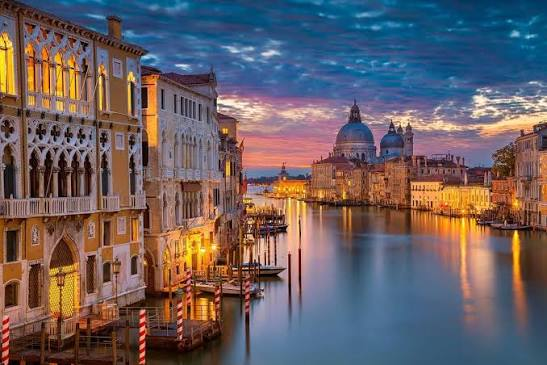
The “city” is not one piece of land. It is 118 small islands. They are stitched together by more than 400 bridges. No cars. No highways. Just canals that shimmer under stone palaces.
But why build a city here?
Fear.
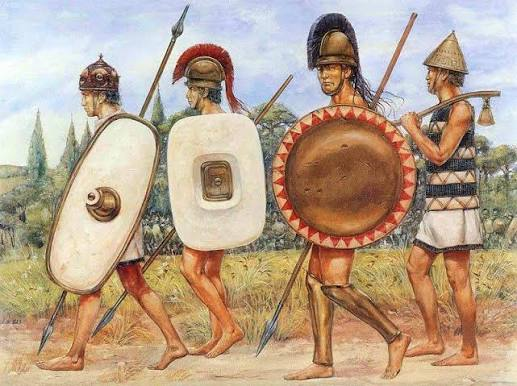
In the 5th century, refugees fled barbarian invaders sweeping across northern Italy. They escaped to the marshy lagoon. It was wet. Unstable. Hard to reach.
Perfect.
Enemies with horses and heavy armor could not cross easily. The lagoon became a shield. What began as a temporary hiding place became something else. Something bold.
The name Venice comes from the ancient Veneti people who lived in the region as early as the 10th century BC. But the Venice we know began as wooden huts driven into mud.
How did they build it?
They drove millions of wooden piles deep into the soft lagoon floor. Alder wood. Oak. Larch. The wood did not rot. It hardened underwater, preserved by the lack of oxygen. On top of those forests of piles, they laid stone platforms. On top of that, palaces.
Layer upon layer. Mud to wood. Wood to stone. Stone to glory.
By the 9th century, Venice was no longer hiding. It was trading.
Its position was perfect. East met West in the Adriatic Sea. Ships sailed in heavy with spices, silk, and grain. Venice controlled Mediterranean trade routes for centuries. Pepper. Cinnamon. Fine fabrics. Gold.
Money flowed.
The city became what many historians call the first real international financial center. As early as the 9th century, Venetian merchants shaped systems of credit, insurance, and maritime law. By the 14th century, Venice was at its peak. Wealthy. Powerful. Feared.
From 810 to 1797, it was the capital of the Republic of Venice. Nearly a thousand years of independence. A city-state that answered to no king.
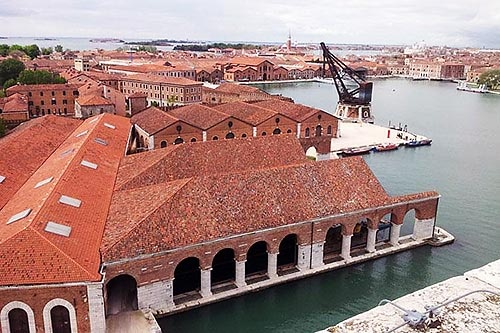
It built ships at the Venetian Arsenal, often described as the first factory in history. Standardized parts. Assembly lines. Mass production of warships. Naval power on demand.
Venice was not just rich. It was organized.
Its fleet played roles in the Crusades. Its forces stood in major conflicts like the Battle of Lepanto. Its flag flew across territories along the Adriatic and deep into the Italian peninsula. Venetian architecture and culture spread far beyond the lagoon.
And then there was art.
From the 13th to the 17th century, Venice thrived as a center of Renaissance brilliance. Painters filled churches with color and drama. Palaces glittered with frescoes. Music floated from open windows.
Light reflected off water and onto canvas.
Venice knew beauty.
But empires shift. Trade routes changed. The Atlantic grew more important than the Mediterranean. Power slowly slipped away.
In 1797, Napoleon arrived. The Republic fell. Venetian sovereignty ended. Later, in 1866, the city became part of the Kingdom of Italy.
Yet Venice survived.
It always has.
Today, it remains one of the world’s most magical places. A UNESCO-listed masterpiece built on water. A city where every step echoes with centuries of ambition.
You cross a bridge. You turn a corner. A quiet canal opens before you. Laundry sways above narrow passages. Gondolas glide slowly past Gothic facades.
And for a moment, time feels different.
Imagine arriving not by crowded bus, but by private water taxi. The same elegant boats used during high-profile events. The city unfolding around you as you glide across the lagoon.
Imagine drifting through cinematic canals on a private gondola ride. The oar cutting through still water. The world reduced to stone, sky, and reflection.
Imagine stepping into a traditional Venetian Carnival mask workshop. Painting your own creation. Carrying home something shaped by your hands.
Three days. Two nights. Enough time to enter the magic. To feel the weight of history beneath your feet. To shop among refined Italian boutiques. To understand that Venice was not built by accident.
It was built by courage.
Built by refugees who refused to disappear.
Built on wood, on trade, on art, on vision.
Venice should not exist.
And that is exactly why it does.